



How Can You Protect Your Car from Salt and Snow Damage?
25-Sep-2026
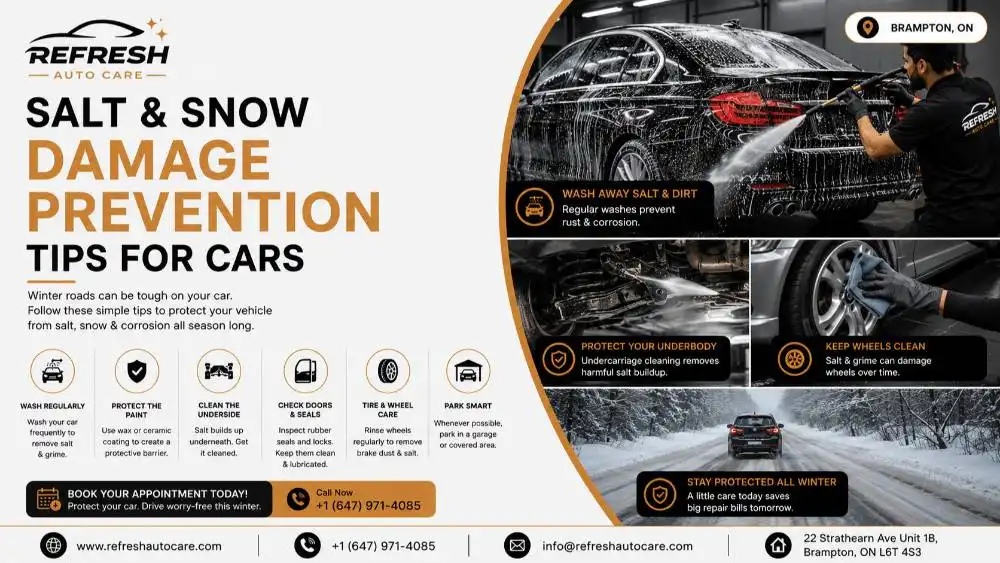
The best way to prevent salt and snow damage is to remove road salt regularly, clean the undercarriage and wheel wells, protect vulnerable painted surfaces, and inspect the vehicle before and after winter.
During winter, wash your vehicle at least every two weeks and sooner after heavy exposure to salted roads. Rinse loose salt before washing, pay special attention to the underbody and wheel wells, and remove snow and ice carefully to avoid unnecessary scratches. AAA recommends regular winter washing and specifically advises drivers to prioritize the undercarriage when removing road-salt buildup.
For Brampton drivers, winter protection can also include paint decontamination, an appropriate paint protection product, and professional car detailing in Brampton when the vehicle needs deeper cleaning or restoration.
Why Trust This Guide?
| Trust Signal | Details |
|---|---|
| Updated for 2026 | Latest winter car care practices and data |
| Industry Research | References to AAA, EPA, Transport Canada |
| Real-World Experience | Based on professional detailing since 2014 |
| Local Market Focus | Brampton, Ontario, and GTA winter conditions |
| Actionable Insights | Checklists, schedules, and practical guidance |
This guide is based on industry research, technical expertise, and practical experience in winter vehicle care.
Last Reviewed: July 2026
Key Takeaways
- Wash your vehicle at least every two weeks during winter and sooner after heavy salt exposure.
- Rinse the undercarriage, wheel wells and lower body panels regularly.
- Rinse loose salt away before washing to reduce abrasive contamination.
- Remove snow with a suitable brush and use a plastic scraper for ice on glass.
- Never pour hot water over frozen glass.
- Consider wax, sealant, ceramic coating or PPF according to your vehicle's protection needs.
- Check paint chips and exposed metal because damaged areas can become corrosion points.
- Follow the vehicle manufacturer's winter maintenance recommendations.
- Give the vehicle a thorough spring cleanup after the winter season.
- EV owners should pay particular attention to underbody cleaning, charging-port cleanliness and inspection of relevant components.
Why Does Road Salt Damage Cars?
Road salt is used during winter because de-icing materials help melt snow and ice and improve road safety. Ontario uses salt, sand, anti-icing liquids and other winter maintenance methods depending on weather and road conditions.
The problem for vehicles begins when salty moisture remains on exposed metal and other vulnerable surfaces. Road spray can reach the undercarriage, wheel wells, brake components, suspension areas, fasteners, rocker panels and lower body sections. If protective coatings are damaged or contamination remains for extended periods, corrosion can become more likely.
The U.S. Environmental Protection Agency notes that road salt can have corrosive effects on vehicles and infrastructure and cites approximately $5 billion in annual repairs in the United States associated with cars, trucks, bridges and roads.
Where Does Salt Usually Accumulate?
The areas most worth checking include:
- Undercarriage
- Wheel wells
- Rocker panels
- Lower doors
- Bumpers
- Suspension components
- Brake-area components
- Seams and crevices where salty moisture can remain
Because much of this contamination is underneath the vehicle, a car can appear clean from above while still carrying significant winter residue underneath.
How Often Should You Wash Your Car in Winter?
Wash your car at least every two weeks during winter and more often after driving on heavily salted roads. A quick rinse can also be useful after particularly heavy exposure to road salt and slush. AAA recommends regular winter washing and emphasizes undercarriage cleaning as part of salt-damage prevention.
Best Winter Car Washing Practices
- Rinse first. Remove loose salt, grit and slush before contact washing.
- Clean the undercarriage. Use an underbody rinse where available.
- Clean the wheel wells. These areas collect salty slush and road debris.
- Pay attention to lower panels. Rocker panels, lower doors and bumpers receive heavy road spray.
- Dry carefully. Pay attention to door jambs, seals, handles and mirrors when freezing conditions are expected.
- Use vehicle-safe products. Follow the vehicle manufacturer's recommendations and the instructions for any protective coating already installed.
For local professional cleaning, you can use professional car wash services in Brampton when the vehicle needs a more thorough winter wash.
What Should You Do After Driving on Heavily Salted Roads?
If your vehicle has been exposed to a heavily salted road, don't wait for visible corrosion before cleaning it.
- Rinse the exterior as soon as practical.
- Flush the undercarriage and wheel wells.
- Rinse the lower body panels and bumpers.
- Wash the vehicle using an appropriate car-care product.
- Dry areas where water can collect and freeze.
- Check for new stone chips or paint damage.
- Maintain the vehicle's existing paint protection according to the manufacturer's instructions.
Regular removal is more useful than allowing several layers of salty grime to build up throughout the winter.
How Can You Protect Your Paint Before Winter?
Start with clean, properly prepared paint. If the surface feels rough after washing, bonded contaminants such as iron particles, brake dust, tar or other fallout may still be present.
A professional paint decontamination service in Brampton can help prepare the surface before polishing or applying paint protection.
Wax and Paint Sealants
Wax and paint sealants can provide a temporary protective layer that makes contamination easier to remove. Their performance and longevity vary by product, preparation and maintenance, so follow the manufacturer's application and reapplication instructions.
Ceramic Coating
A ceramic coating creates a durable protective layer with hydrophobic properties that can make washing and contamination removal easier. It is not a substitute for regular winter washing.
If you are considering this type of protection before winter, see ceramic coating in Brampton for information about professional preparation and application.
Paint Protection Film
PPF is different from ceramic coating because its main purpose is physical protection against impacts such as stone chips and road debris. It can be particularly useful on high-impact areas such as the front bumper, hood and mirror areas.
For vehicles that see frequent highway driving, paint protection film in Brampton may be worth considering as part of a broader paint-protection strategy.
What Is the Best Winter Protection for Your Vehicle?
| Vehicle situation | Recommended approach |
|---|---|
| Daily driver exposed to road salt | Regular winter washing and underbody rinsing |
| New vehicle before its first winter | Proper cleaning, decontamination and suitable paint protection |
| Rough or contaminated paint | Paint decontamination before protection |
| Frequent highway driving | Consider PPF for high-impact painted areas |
| Vehicle parked outdoors | Consistent washing and appropriate surface protection |
| Existing swirl marks | Paint correction in Brampton before applying long-term protection |
| EV used regularly in winter | Undercarriage cleaning and inspection of relevant charging/electrical components |
| Heavy winter contamination | Professional detailing and decontamination |
How Should You Remove Snow and Ice From a Car?
Remove loose snow gently with a suitable automotive snow brush rather than dragging heavy, gritty snow across painted surfaces.
For ice on glass, use the vehicle's defroster and an appropriate plastic ice scraper. Avoid aggressive scraping and never pour hot or boiling water over frozen glass because rapid temperature changes can damage glass.
Ontario also advises drivers to clear snow and ice from their vehicles before driving.
Winter Maintenance Checklist for Brampton Drivers
Before and during winter, check:
- Tire pressure
- Winter tire condition and tread
- Battery condition
- Brakes
- Lights
- Windshield wipers
- Washer fluid
- Heating and defrosting systems
- Exhaust system
- Visible paint chips and damage
Transport Canada recommends keeping the vehicle in good working order and checking these systems before winter. Its current guidance also recommends at least 4 mm of tread depth on winter tires for the safest winter driving and recommends winter washer fluid rated to -40°C.
How Can EV Owners Reduce Winter Road-Salt Exposure?
EV owners should follow their vehicle manufacturer's washing and maintenance instructions while paying particular attention to the undercarriage, charging port and components exposed to winter road spray.
AAA's current winter guidance recommends:
- Regular undercarriage rinsing
- Keeping charging ports dry and free of salt
- Inspecting relevant sensors and wiring
- Using corrosion-inhibiting protection where appropriate
- Parking indoors when practical
Do not assume that an EV requires completely different exterior washing. The key is to follow the manufacturer's instructions and keep salt and winter contamination from accumulating unnecessarily.
Common Road Salt and Winter Car Care Myths
Myth: You should not wash your car in winter.
Fact: Winter washing is important because it removes road salt and salty residue. AAA recommends washing at least every two weeks during winter and more often after heavy exposure.
Myth: Ceramic coating means you never need to wash your car.
Fact: Ceramic coating can make contamination easier to remove, but salt still needs to be washed away regularly.
Myth: PPF and ceramic coating do the same thing.
Fact: Ceramic coating primarily provides surface and hydrophobic protection, while PPF provides a physical film barrier against impacts such as stone chips and road debris.
Myth: An older car does not need winter protection.
Fact: Older vehicles still benefit from regular cleaning and inspection. Existing paint damage, corrosion and worn protective surfaces can make maintenance particularly important.
Myth: A car that looks clean cannot have salt underneath it.
Fact: Road spray can reach the undercarriage, wheel wells and other areas that are difficult to see during a normal exterior inspection.
When Should You Get Professional Car Detailing?
Professional detailing is particularly useful when a vehicle has:
- Heavy salt and winter contamination
- Bonded iron or road fallout
- Tar or other stubborn contaminants
- Swirl marks and paint defects
- Salt-stained interior surfaces
- Paint chips that need assessment
- Existing protection that needs maintenance
- A need for professional ceramic coating or PPF preparation
Professional car detailing in Brampton can provide a deeper exterior and interior cleaning than a routine maintenance wash.
What Should You Do After Winter?
Spring is the right time to assess the vehicle for contamination and damage accumulated during the winter.
A spring cleanup may include:
- Undercarriage cleaning
- Exterior decontamination
- Iron fallout removal
- Tar removal where required
- Paint inspection
- Paint correction in Brampton where appropriate
- Interior cleaning
- Protection maintenance
If the paint feels rough even after washing, professional paint decontamination in Brampton can help prepare the surface for further paint care.
Frequently Asked Questions
1. How often should I wash my car in winter?
Wash your car at least every two weeks during winter and sooner after heavy exposure to salted roads. Prioritize the undercarriage, wheel wells and lower body panels.
2. Does road salt damage car paint?
Road salt and salty moisture can contribute to corrosion and can contaminate painted surfaces. Chips, scratches and damaged protective layers can make exposed areas more vulnerable, so regular washing and appropriate paint protection are useful winter-care measures.
3. Does road salt cause rust?
Road salt does not create rust on its own. However, when salt dissolves in moisture, it creates an environment that can accelerate corrosion of exposed metal.
4. Should I wash the undercarriage in winter?
Yes. The undercarriage is one of the most important areas to rinse because it receives direct exposure to salty road spray, slush and debris.
5. Can I wash my car when it is below freezing?
Yes, provided you can dry the vehicle adequately and conditions are suitable. Pay particular attention to door seals, handles, mirrors and jambs where trapped water can freeze.
6. Is ceramic coating good for winter?
Ceramic coating can provide hydrophobic and chemical-resistance benefits and can make winter contamination easier to remove. It does not eliminate the need for regular washing.
7. Is PPF worth it for winter driving?
PPF can be useful for vehicles frequently exposed to highway driving, stone chips and road debris because it provides a physical protective film over selected painted areas.
8. How do I remove salt stains from my car interior?
Use a cleaner appropriate for the specific material and follow the vehicle and product manufacturer's care instructions. Fabric, leather, vinyl and Alcantara require different cleaning approaches. Persistent staining may require professional interior detailing.
9. How do I protect an EV from road salt?
Follow the manufacturer's washing and maintenance guidance, rinse the undercarriage regularly, keep the charging port clean and dry, and have relevant components inspected if you notice corrosion, damage or unusual behaviour. AAA also recommends undercarriage rinsing and inspection of relevant EV components.
10. What are the signs of winter salt damage?
Common warning signs include rust spots, bubbling or flaking paint, corrosion on exposed metal, damaged paint around stone chips and unusual issues involving components exposed to road spray. If you notice significant corrosion or mechanical symptoms, have the vehicle professionally inspected.
Protect Your Vehicle Before Winter Damage Builds Up
Road salt and winter contamination are part of driving in Brampton, but consistent maintenance can reduce unnecessary buildup and help preserve your vehicle.
The most important habits are simple: wash regularly, clean the undercarriage, remove snow and ice correctly, maintain the vehicle according to the manufacturer's recommendations, and use paint protection that matches your driving conditions.
For deeper cleaning, paint preparation and long-term protection, Refresh Auto Care provides detailing, paint decontamination, ceramic coating, PPF and vehicle protection services in Brampton.
Not sure whether your vehicle needs detailing, paint decontamination, ceramic coating or PPF? Refresh Auto Care can assess the vehicle's condition and help you choose an appropriate protection approach.
Explore vehicle protection packages | Contact Refresh Auto Care