



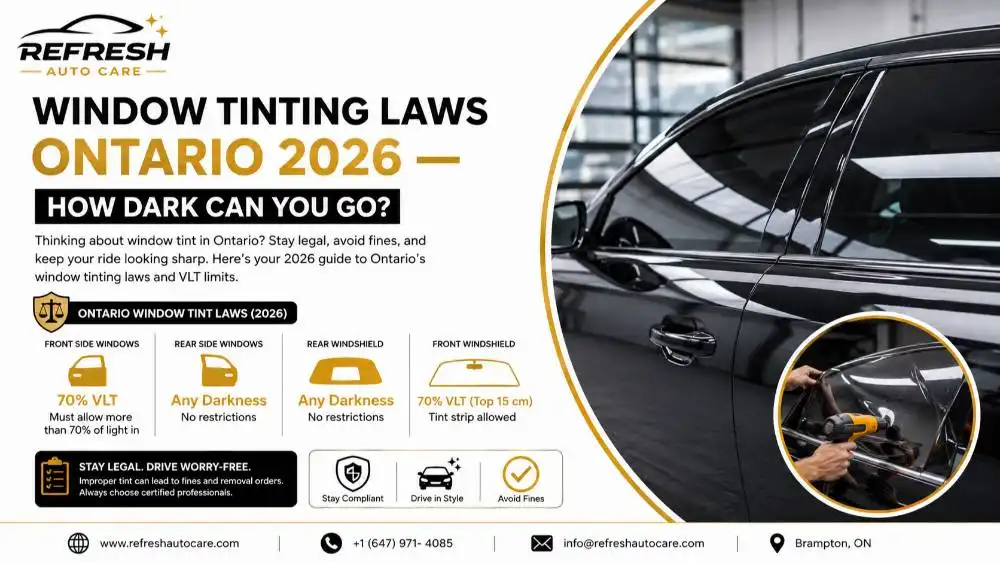
Window Tinting Laws Ontario 2026 — How Dark Can You Go?
07-Oct-2026
What is the darkest legal window tint in Ontario for 2026?
For vehicles manufactured on or after January 1, 2017, Ontario's Passenger/Light-Duty Vehicle Inspection Standard identifies less than 70% light transmittance on a side window directly to the left or right of the driver as a rejection condition. Windshield tinting is also restricted, while rear-window visibility is treated differently when qualifying exterior mirrors provide the required rearward view.
Does 70% film mean 70% VLT?
Not necessarily. The VLT printed on a film does not automatically equal the final VLT of the installed window. The finished measurement is affected by the vehicle's factory glass and the aftermarket film together. For inspection purposes, the relevant light-transmittance requirement applies to the finished window, so the film's advertised VLT should not be treated as the final reading.
Can I tint my entire windshield in Ontario?
No. The Passenger/Light-Duty Vehicle Inspection Standard sets specific limits for windshield light transmittance and tinting location. Tinting that reduces light transmittance below 70%, extends more than 75 mm from the top of the windshield, or extends beyond the AS line is a rejection condition. A limited upper band may be possible only when it complies with all applicable requirements.
Why Trust This Guide?
| Trust Signal | Details |
|---|---|
| Updated for 2026 | Current Ontario Highway Traffic Act and Passenger/Light-Duty Vehicle Inspection Standard references |
| Local Expertise | Based on Brampton & GTA driving conditions and enforcement practices |
| Industry References | Ontario Highway Traffic Act, Passenger/Light-Duty Vehicle Inspection Standard, International Window Film Association |
| Legal Accuracy | Verified against official Ontario government sources |
| Review Methodology | Transparent rating system explained below |
This guide is based on Ontario's Highway Traffic Act, the Passenger/Light-Duty Vehicle Inspection Standard, and professional installation practices. Each aspect has been assessed for legal accuracy, practical relevance, and clarity. This information is for general guidance only and should not be treated as legal advice.
Last Reviewed: July 2026
How We Rated These Window Tinting Providers for Legal Compliance
| Factor | Weight |
|---|---|
| Knowledge of Ontario Tint Laws | 30% |
| Installation Quality & Precision | 25% |
| Film Quality & UV/Heat Rejection | 20% |
| Warranty & Aftercare Support | 10% |
| Customer Reviews & Reputation | 10% |
| Light Meter Testing & Compliance Verification | 5% |
These ratings are derived from publicly available customer feedback, service evaluations, and industry standards. Scores may vary as services evolve.
Introduction
Ontario window tint rules depend on the vehicle, window position, and applicable inspection requirements. For vehicles manufactured on or after January 1, 2017, Ontario's Passenger/Light-Duty Vehicle Inspection Standard identifies less than 70% light transmittance on a side window directly to the left or right of the driver as a rejection condition. Windshield tinting is also restricted, while rear-window visibility is treated differently when qualifying exterior mirrors provide the required rearward view.
If you're considering window tinting in Brampton, the important point is that the number printed on a film package is not necessarily the final light-transmittance reading of the installed window. Factory glass and aftermarket film contribute to the finished measurement.
This guide explains Ontario's window tint rules, VLT, windshield restrictions, rear-window requirements, enforcement, compliance considerations, and how to choose a professional installer.
According to the International Window Film Association, window film can block up to 99% of UV rays, significantly reducing skin cancer risk and interior fading. However, choosing the right film for your vehicle requires understanding both the product specifications and the applicable legal requirements.
Ontario Has Two Important Compliance Layers
Ontario window-tint compliance is not based on one single rule. Drivers should distinguish between:
- Highway Traffic Act requirements — These address driver visibility, coloured or reflective material, and rear-window visibility. Sections 73 and 74 contain the relevant requirements.
- Passenger/Light-Duty Vehicle Inspection Standard — This provides inspection rejection criteria, including the 70% light-transmittance requirement for qualifying driver-side windows on vehicles manufactured on or after January 1, 2017, as well as specific windshield and tinting requirements.
This distinction matters because an inspection rejection criterion should not automatically be presented as though it were the only rule governing everyday roadside compliance.
Who Should Use Professional Window Tinting?
Professional window tinting is recommended for:
- Daily Commuters – Reduce glare and eye strain during long drives.
- Families – Protect children and passengers from harmful UV rays.
- Luxury Car Owners – Preserve interior materials from fading and cracking.
- Ride-Sharing Drivers – Create a comfortable environment for passengers.
- Drivers Sensitive to Sunlight – Reduce brightness and heat inside the cabin.
- Anyone Wanting Privacy & Security – Deter prying eyes while maintaining compliance.
Ontario Window Tint Laws at a Glance (2026)
| Window Position | Ontario Requirement |
|---|---|
| Windshield | Tinting extending more than 75 mm from the top or beyond the AS line is a rejection condition under the inspection standard |
| Driver-Side/Front-Side Window | For vehicles manufactured on/after Jan. 1, 2017: below 70% light transmittance is a rejection item |
| Rear Windows | Different rules apply; rear visibility can be satisfied through qualifying exterior mirrors |
What Does VLT Mean — and Does 70% Film Mean 70% VLT?
VLT stands for Visible Light Transmission. It measures the percentage of visible light that passes through your window glass. A higher VLT means more light gets through, so the window appears lighter. A lower VLT means less light passes through, making the window appear darker.
For example:
- 70% VLT means 70% of outside light enters the vehicle.
- 20% VLT means only 20% of light enters, making the window much darker.
Important: The VLT printed on a film does not necessarily equal the final VLT of the installed window. The finished measurement can be affected by the vehicle's factory glass and the aftermarket film together. For this reason, installers should evaluate the completed glass-and-film combination rather than relying solely on the film's advertised percentage.
The International Window Film Association provides industry standards and education for window film professionals, helping consumers understand the importance of certified films and professional installation.
What Do 70%, 50%, 35%, 20%, and 5% Tint Mean?
| VLT | Approximate Visual Appearance |
|---|---|
| 70% | Very light |
| 50% | Light |
| 35% | Medium |
| 20% | Dark |
| 5% | Very dark |
Actual appearance varies by vehicle glass, lighting conditions, and film construction. These percentages describe visible light transmission, not Ontario legal status. Ontario legality depends on the vehicle, window position, and applicable requirements.
Window-by-Window Breakdown
Windshield
The Passenger/Light-Duty Vehicle Inspection Standard sets rejection conditions where light transmittance is below 70%, tinting extends more than 75 mm from the top of the windshield, or tinting extends beyond the AS line. The inspection standard permits no blanket assumption that a windshield tint band is legal. Any upper windshield band must remain within the applicable light-transmittance, 75 mm, and AS-line requirements. Do not assume that a film advertised as a windshield strip is automatically compliant.
Front Side Windows (Driver and Passenger)
Inspection standard: For vehicles manufactured on or after January 1, 2017, light transmittance below 70% on a window directly to the left or right of the driver is a rejection condition.
Because factory glass already has its own light-transmission characteristics, aftermarket film can reduce the finished glass-and-film reading below 70%. For inspection purposes, the relevant light-transmittance requirement applies to the finished window, so the film's advertised VLT should not be treated as the final reading.
Practical tip: If you want to stay legal, leave your front side windows completely untinted or use a nearly clear UV-blocking film that is specifically designed to stay above 70% VLT when combined with factory glass.
Rear Windows
Rule: Different rear-window visibility requirements apply.
The 70% light-transmittance rejection criterion discussed above applies specifically to windows directly to the left or right of the driver on vehicles manufactured on or after January 1, 2017. Rear-window visibility is addressed differently under Ontario law. The Highway Traffic Act's rear-window clear-view requirement does not apply where properly positioned exterior mirrors provide the driver with a clearly reflected view of the roadway behind the vehicle.
This does not mean every dark rear-window film is automatically compliant. The vehicle's mirror configuration and other applicable requirements still matter.
How Is Window Tint VLT Measured?
VLT is measured by determining how much visible light passes through the vehicle's glass and film combination. A VLT meter can provide a numerical reading of light transmission. Because factory glass already has its own light-transmission characteristics, the final installed reading can differ from the film's advertised VLT.
Reputable installers should test the final installation with a light meter to verify the finished glass-and-film reading against the applicable requirement.
How Is Window Tint Enforced in Ontario?
Police enforcement can involve assessing whether vehicle windows obstruct required views or violate applicable material restrictions. Light-transmittance meters may also be used to measure the amount of visible light passing through the glass and film. Enforcement procedures can vary according to the circumstances and the police service involved.
Ontario's Highway Traffic Act also contains separate requirements concerning driver visibility and coloured or reflective material on certain windows.
Penalties for Illegal Window Tint in Ontario
Getting caught with illegal window tint can lead to several consequences:
- Fines – Illegal window tint can result in a provincial offence charge and other enforcement consequences. The applicable penalty depends on the specific offence and circumstances, so drivers should verify current penalties through official Ontario sources.
- Repair Orders – Police may issue a repair order requiring you to remove the illegal tint within a set time. Drivers should follow the instructions on the order and have the vehicle re-inspected where required.
- Failed Safety Inspections – If the vehicle is undergoing an inspection that applies the Passenger/Light-Duty Vehicle Inspection Standard and the tint meets a listed rejection condition, the vehicle can fail that inspection until the defect is corrected.
Medical Exemptions and Special Circumstances
Do not assume that a doctor's letter automatically authorizes darker window film in Ontario. If you have a medical or light-sensitivity concern, confirm directly with the appropriate Ontario authority whether any accommodation or exemption applies to your vehicle and specific window before installing additional tint.
Reflective Window Film and Ontario Visibility Rules
Ontario's Highway Traffic Act prohibits coloured or reflective material on the windshield or on a window immediately to the left or right of the driver when it substantially obscures the vehicle's interior when viewed from outside. The Act also requires the driver to have a clear view.
Before You Install Window Tint in Brampton
Before choosing a film, ask the installer:
- What is the film's certified VLT?
- What is the expected final VLT over my factory glass?
- Which windows can legally receive the film?
- Will you measure the finished installation?
- What are the manufacturer's UV specifications?
- What are the manufacturer's heat-rejection specifications?
- What warranty is provided?
- What happens if the film needs to be removed?
Window Tinting for Brampton and GTA Driving
Brampton drivers regularly deal with strong summer sunlight, highway commuting, and changing seasonal conditions. Window film can be useful for reducing glare, improving cabin comfort, and limiting UV exposure. However, the appropriate film should be selected according to the window location and Ontario's applicable visibility requirements.
For Brampton drivers, the practical decision is usually not simply how dark the film looks. Consider heat rejection, glare reduction, UV protection, visibility, and the applicable Ontario requirements for each window.
What Does a VLT Percentage Not Tell You?
A VLT percentage only describes visible-light transmission. It does not by itself tell you whether a film is legal for a particular vehicle window in Ontario.
A film's final performance can also depend on:
- Factory glass
- Aftermarket film
- Combined light transmission
- Window position
- Vehicle model year
- Exterior mirror configuration
- Applicable inspection requirements
- Whether the film is coloured or reflective
- Installation quality
Window Tinting Brampton — What to Look For
When choosing a window tinting provider in Brampton, consider these factors:
- Legal Knowledge – Does the shop understand Ontario's tint laws? Can they explain the VLT requirements and how factory glass affects the final reading?
- Film Quality – Do they use high-quality, UV-blocking films? Ceramic films can provide strong heat rejection while maintaining high VLT in suitable applications. However, legality still depends on the finished installation, window position, and applicable Ontario requirements.
- Warranty – Do they offer a warranty on their work? A reputable shop stands behind its installations.
- Reviews and Reputation – What do other customers say about their experience? Look for reviews that mention professionalism, quality, and compliance.
- Light Meter Testing – Does the shop test the final installation with a light meter? This helps verify the finished installation's light-transmittance reading against the applicable requirement.
Why Choose Professional Window Tinting in Brampton?
Choosing an experienced professional installer can reduce installation problems and help you select a film appropriate for your vehicle, window position, and intended use. A reputable installer should also be able to explain the film's specifications, measure the finished installation where appropriate, and discuss Ontario's applicable visibility requirements. The vehicle owner remains responsible for ensuring the final installation complies with applicable requirements.
If you're looking for professional window tinting in Brampton, Refresh Auto Care can help you choose a film based on your vehicle, window position, and applicable Ontario requirements. We also offer car detailing Brampton and ceramic coating Brampton to keep your entire vehicle looking its best.
Expert Tip
When considering window tint, don't focus solely on the shade percentage. A high-quality ceramic film with 70% VLT can block up to 99% of UV rays and provide excellent heat rejection while remaining legal for front side windows in Ontario. Also, always ask your installer to measure the finished glass-and-film combination with a light meter — this is the only way to confirm compliance with Ontario's 70% requirement. The vehicle owner is ultimately responsible for ensuring compliance, so verify everything before installation.
Reviewed By
Automotive window tinting specialists with practical experience in legal compliance, film selection, and installation techniques. This content is reviewed periodically to reflect current laws and best practices.
Frequently Asked Questions (FAQs)
1. What is the darkest legal window tint in Ontario?
For vehicles manufactured on or after January 1, 2017, a driver-side window measuring below 70% light transmittance is a rejection condition under the Ontario inspection standard. Rear windows have different requirements and depend on the vehicle's mirror configuration.
2. Can I tint my entire windshield in Ontario?
No. The Passenger/Light-Duty Vehicle Inspection Standard sets specific limits for windshield light transmittance and tinting location. Tinting that reduces light transmittance below 70%, extends more than 75 mm from the top of the windshield, or extends beyond the AS line is a rejection condition. A limited upper band may be possible only when it complies with all applicable requirements.
3. What happens if I get caught with illegal window tint?
You can receive a fine, a repair order requiring you to remove the tint, and your vehicle could fail a safety inspection.
4. How do police check window tint darkness?
Light-transmittance meters can be used to assess the amount of visible light passing through vehicle glass and film. Enforcement methods can vary by police service and circumstances.
5. Can I get a medical exemption for darker tint?
Do not assume that a doctor's letter automatically authorizes darker window film. Drivers with medical or light-sensitivity concerns should confirm any applicable accommodation or exemption directly with the relevant Ontario authority before installing additional tint.
6. Is reflective window tint legal in Ontario?
Ontario's Highway Traffic Act restricts coloured or reflective material on the windshield and on windows immediately to the left or right of the driver when it substantially obscures the vehicle's interior or interferes with the driver's required view.
7. What is involved in removing illegal window tint?
Removal can be time-consuming and requires careful work to avoid damaging the defrost lines on rear windows. Professional removal is particularly important on rear windows where heating elements or defroster lines can be damaged during improper removal.
8. Does window tinting affect my car's safety inspection?
If the vehicle is undergoing an inspection that applies the Passenger/Light-Duty Vehicle Inspection Standard and the tint meets a listed rejection condition, the vehicle can fail that inspection until the defect is corrected.
9. What is the best window tint for heat rejection in Ontario?
High-quality ceramic window films can provide strong heat rejection while maintaining a relatively clear appearance. Performance depends on the specific film and its manufacturer specifications.
10. Are there VLT limits for rear windows in Ontario?
The rear windows are treated differently from the driver-side windows. Ontario's Highway Traffic Act provides an exception to the rear-window clear-view requirement when properly positioned exterior mirrors provide the required reflected rearward view. Other vehicle and inspection requirements can still apply.
11. Why are front windows restricted but rear windows are not?
Front and side windows around the driver's seating position are subject to clear-view and light-transmittance requirements because they directly affect the driver's forward and side visibility. Rear-window visibility is treated differently under Ontario law when qualifying exterior mirrors provide the required rearward view.
12. Can I put 70% tint on my front windows in Ontario?
A film labelled 70% VLT does not automatically make a front-side window compliant. For vehicles manufactured on or after January 1, 2017, the applicable inspection standard identifies light transmittance below 70% on a window directly to the left or right of the driver as a rejection condition. Because factory glass and aftermarket film are measured together, the finished window should be assessed rather than relying only on the film's advertised VLT.
13. Does factory tint count toward VLT in Ontario?
Yes, the finished window's light transmission is affected by both the vehicle's original glass and any aftermarket film. Therefore, a film's advertised VLT should not be treated as the final VLT of the installed window.
14. Is 50% tint legal on front windows in Ontario?
For vehicles manufactured on or after January 1, 2017, the relevant inspection criterion is whether light transmittance falls below 70% on a window directly to the left or right of the driver. A film labelled 50% VLT should therefore not be treated as a compliant front-window choice. The finished glass-and-film combination is what matters for the inspection measurement.
15. Is 5% tint legal in Ontario?
A 5% VLT film is extremely dark and should not be treated as a compliant choice for windows directly to the left or right of the driver on vehicles manufactured on or after January 1, 2017. For those windows, the Passenger/Light-Duty Vehicle Inspection Standard identifies light transmittance below 70% as a rejection condition. Rear-window requirements are different and depend on the applicable visibility rules.
16. Does Refresh Auto Care offer window tinting in Brampton?
Yes. Refresh Auto Care provides professional window tinting services in Brampton with films selected according to the vehicle, window location, and applicable Ontario requirements.
Conclusion
For vehicles manufactured on or after January 1, 2017, the Ontario Passenger/Light-Duty Vehicle Inspection Standard identifies light transmittance below 70% on a window directly to the left or right of the driver as a rejection condition. Other Highway Traffic Act visibility and material restrictions can also apply depending on the window and vehicle. Windshield tinting is subject to separate inspection requirements, and rear-window visibility is treated differently under the Highway Traffic Act's clear-view and mirror provisions.
If you are considering window tinting Brampton or searching for window tinting near me, choose a professional installer who understands the law and uses quality films. At Refresh Auto Care, we help Brampton and GTA drivers choose window films with Ontario's applicable visibility requirements in mind. We also offer car detailing Brampton and ceramic coating Brampton to keep your entire vehicle looking its best.
Stay compliant, stay comfortable, and drive with confidence. Explore Window Tinting in Brampton or Contact Refresh Auto Care to book your appointment today.
Ontario Compliance Information Review: This article was checked against Ontario's Highway Traffic Act and Passenger/Light-Duty Vehicle Inspection Standard.
Important: Ontario vehicle requirements can vary according to vehicle type, model year, window position, and the applicable inspection standard. This article provides general information and should not be treated as legal advice.