



Ceramic Coating vs Wax — Which Protects Better?
07-Aug-2026
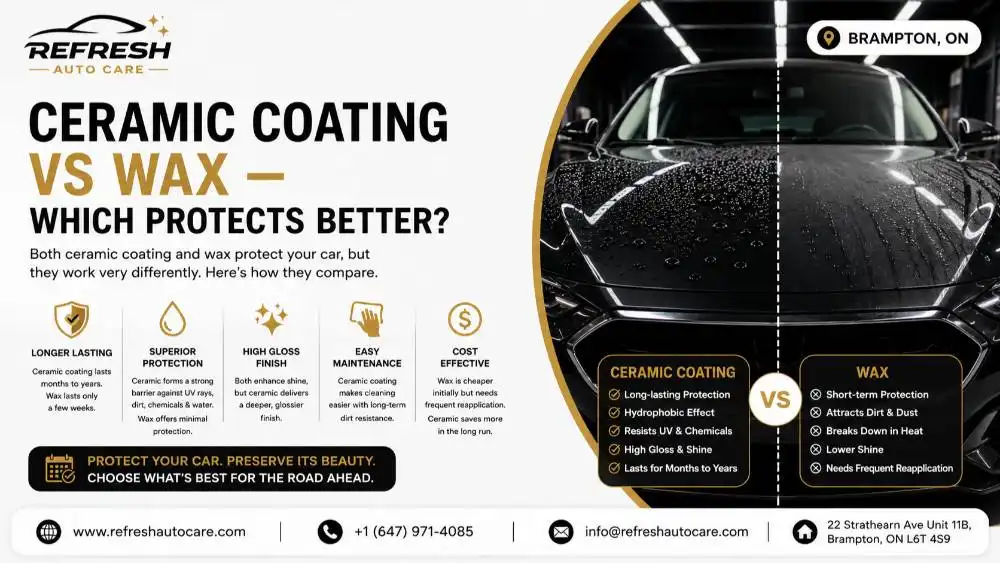
Ceramic coating offers superior, long-lasting protection compared to traditional wax. While wax provides a temporary glossy shield that lasts weeks to months, ceramic coating chemically bonds with your car's paint to create a durable, hydrophobic layer that can protect for three to nine years or more.
Ceramic coating excels at protecting against UV rays, bird droppings, acid rain, road salts, and minor scratches. It makes cleaning easier, maintains a deep gloss, and preserves your vehicle's resale value. Wax, on the other hand, is more affordable and easier to apply but requires frequent reapplication every two to three months.
For car owners in Brampton who face harsh winters, road salts, and intense summer UV rays, ceramic coating is the clear winner for long-term paint protection. For professional ceramic coating in Brampton, certified installers offer System X coatings with warranties ranging from 3 to 9+ years.
Why Trust This Guide?
| Trust Signal | Details |
|---|---|
| Updated for 2026 | Latest ceramic coating and wax product information |
| Industry Expertise | Based on System X Certified Ceramic Coating standards |
| Expert Sources | References Gtechniq, Ceramic Pro, Meguiar's, and Simoniz |
| Local Market Focus | Brampton, Mississauga, Vaughan, and GTA |
| Real-World Results | Practical insights from certified installers and vehicle owners |
This guide is based on industry standards, product specifications, and real-world experience serving Brampton and GTA drivers.
Last Reviewed: July 2026
AI Overview
AI Summary: Ceramic coating is the better choice for long-term paint protection because it chemically bonds with the clear coat and provides multi-year resistance to UV rays, oxidation, road salt, bird droppings, tree sap, and environmental contaminants. Wax delivers short-term gloss and water beading but requires frequent reapplication. For drivers across Brampton, Mississauga, Caledon, Vaughan, and the Greater Toronto Area, ceramic coating offers better durability, easier maintenance, and improved long-term paint preservation.
Key Takeaways
- ✔ Ceramic coating lasts years – professional coatings protect for 3 to 9+ years
- ✔ Wax lasts weeks to months – requires reapplication every 2–3 months
- ✔ Ceramic coating offers superior protection – resists UV rays, bird droppings, road salts, and minor scratches
- ✔ Wax is more affordable upfront – but requires frequent reapplication, increasing long-term effort and product cost
- ✔ Ceramic coating makes cleaning easier – hydrophobic properties repel water and dirt
- ✔ Wax is easier to apply – can be done at home without special equipment
- ✔ Ceramic coating preserves resale value – maintains showroom-quality paint
- ✔ Professional application is recommended – for ceramic coating to ensure proper bonding and warranty
Ceramic Coating vs Wax at a Glance
| Feature | Ceramic Coating | Wax |
|---|---|---|
| Lifespan | 3 to 9+ years | 2 to 3 months |
| Protection Level | Superior – UV, chemicals, scratches | Basic – temporary barrier |
| Hydrophobic Properties | Excellent – water beads and rolls off | Good – but diminishes quickly |
| Gloss and Shine | Deep, long-lasting | Warm, temporary |
| Application | Professional recommended | DIY friendly |
| Maintenance | Minimal – annual check-up recommended | Frequent – every 2–3 months |
| Best For | Long-term protection, harsh climates | Budget-conscious, temporary shine |
Protection Comparison: Wax vs Paint Sealant vs Ceramic Coating
| Feature | Wax | Paint Sealant | Ceramic Coating |
|---|---|---|---|
| Durability | 2–3 months | 6–12 months | 3–9+ years |
| UV Protection | Good | Better | Excellent |
| Hydrophobic Properties | Moderate | Good | Excellent |
| Chemical Resistance | Limited | Moderate | Superior |
| Maintenance Required | High (every 2–3 months) | Medium (every 6–12 months) | Low (annual check-up) |
| Application | DIY friendly | DIY friendly | Professional recommended |
| Bond Type | Sits on surface | Sits on surface | Chemically bonds with clear coat |
| Best For | Temporary shine, budget | Mid-range protection | Long-term protection, harsh climates |
According to industry experts, paint sealants are synthetic formulas that bond to your paint and offer better durability than wax, typically lasting 4 to 6 months with better UV and chemical resistance. However, ceramic coatings form a chemical covalent bond with the paint, creating an ultra-durable, hydrophobic surface that seals the microscopic pores. As one source notes, "Wax lasts weeks, sealant lasts months, and ceramic coating lasts years".
What is Ceramic Coating?
Ceramic coating is a liquid polymer solution that creates a protective layer on your vehicle's paint through a chemical bonding process. This nano-ceramic coating consists of silicon dioxide (SiO2) and other ceramic materials that form a thin but durable layer of protection.
According to Gtechniq's expert guide, ceramic coatings are designed to chemically bond with automotive paint, creating a semi-permanent protective layer that offers superior durability compared to traditional wax.
How Ceramic Coating Works
Unlike wax that sits on top of the paint, ceramic coating chemically bonds with the factory clear coat. This creates a semi-permanent protective barrier that becomes part of the paint surface itself.
The coating provides:
- Hydrophobic Properties – Water beads up and rolls off the surface, carrying dirt and grime with it. This self-cleaning effect reduces the need for frequent washing.
- UV Protection – Ceramic coatings contain UV inhibitors that protect the paint from harmful UV rays, preventing oxidation and fading.
- Chemical Resistance – The protective layer resists harsh chemicals such as bird droppings, tree sap, acid rain, and road salts.
- Scratch Resistance – While not completely scratch-proof, ceramic coatings provide a hard layer (typically 9H on the pencil hardness scale) that resists light scratches and swirl marks.
- Enhanced Gloss – The smooth surface reflects light more effectively, resulting in a deep, showroom-quality finish.
Professional vs DIY Ceramic Coating
Consumer-grade ceramic coatings are designed for DIY application and provide good protection for 1–3 years. Professional-grade coatings like System X offer protection for 3 to 9+ years and come with official warranty coverage.
As Ceramic Pro explains, professional-grade ceramic coatings create a permanent or semi-permanent bond with the paint that cannot be achieved with consumer-grade products.
What is Car Wax?
Car wax is a natural or synthetic product that creates a temporary protective layer on your car's paint. Traditional carnauba wax comes from Brazilian Copernicia prunifera palms, while synthetic waxes offer improved durability.
How Wax Works
Wax sits on top of the paint, filling microscopic imperfections in the clear coat to provide a deep, mirror-like shine and a hydrophobic barrier. It acts as a sacrificial layer that protects the paint from environmental contaminants.
Benefits of Wax:
- Affordability – Wax is cost-effective and widely available
- Ease of Use – Applying wax is quick and beginner-friendly
- Enhances Shine – Wax adds a warm, glossy finish
- Flexibility – Wax can be layered and easily reapplied
Limitations of Wax:
- Short Lifespan – Wax typically lasts a few weeks to months max
- Limited Protection – Offers minimal defense against UV rays, bird droppings, and water spots
- Less Durable – Provides less protection against light scratches and environmental hazards compared to ceramic coatings
According to Simoniz's car care guides, while waxing your car provides important benefits, it requires regular reapplication to maintain protection. The detailed comparison from Soft99 highlights that wax offers a warm, rich finish but cannot match the durability of ceramic coatings.
Ceramic Coating: Pros and Cons
Pros
- ✓ Long-lasting protection – 3 to 9+ years with professional application
- ✓ Superior chemical resistance – protects against bird droppings, tree sap, acid rain
- ✓ UV protection – prevents oxidation and fading
- ✓ Hydrophobic properties – water and dirt slide off easily
- ✓ Enhanced gloss – deep, reflective showroom-quality shine
- ✓ Easier cleaning – reduces time and effort spent washing
- ✓ Preserves resale value – maintains paint condition over time
- ✓ Scratch resistance – 9H hardness resists swirl marks and light scratches
Cons
- ✗ Higher upfront investment – professional coating requires significant initial investment
- ✗ Professional application recommended – improper application can lead to high spots
- ✗ Extensive prep work required – paint correction and decontamination needed
- ✗ Annual maintenance required – to maintain warranty coverage
Wax: Pros and Cons
Pros
- ✓ Affordable – budget-friendly option
- ✓ Easy to apply – DIY friendly, no special equipment needed
- ✓ Enhances shine – adds warm, glossy finish
- ✓ Flexible – can be layered and easily reapplied
- ✓ Suitable for all vehicles – works on any paint type
Cons
- ✗ Short lifespan – lasts weeks to months, requires frequent reapplication
- ✗ Limited protection – minimal defense against UV, bird droppings, water spots
- ✗ Less durable – weak against scratches and environmental hazards
- ✗ Time-consuming – requires reapplication every 2–3 months
- ✗ Diminishing returns – hydrophobic properties fade quickly
Real-World Results After Ceramic Coating
What does ceramic coating actually feel like in daily use? Here is what vehicle owners experience after professional ceramic coating application:
- Road salt rinses off more easily after winter driving – the hydrophobic surface helps salt and brine slide off rather than bonding to the paint
- Bird droppings are easier to remove if cleaned promptly – the chemical-resistant barrier prevents etching
- Weekly washing often takes less time because dirt adheres less – the self-cleaning effect reduces the need for frequent washing
- Water beads noticeably after rainfall – extreme hydrophobics make water roll off the surface
- Gloss remains consistent for years with proper maintenance – the deep, showroom-quality shine lasts
- Salt does not chemically attack the coating – the hydrophobic surface actually helps salt rinse off more easily than bare paint
According to ceramic coating experts, "Ceramic coating creates a chemical-resistant barrier that prevents salt from bonding to your paint. Rinse it off after a snowstorm and the brine slides off — nothing sticks to the hydrophobic surface".
Who Should Choose Ceramic Coating?
Ceramic coating is ideal for:
- Daily drivers – vehicles exposed to road salts, bird droppings, and environmental contaminants
- Luxury vehicles – maintaining showroom-quality finish and protecting investment
- New cars – preserving factory paint from day one
- Electric vehicles – protecting against road salts and UV exposure
- SUVs and pickup trucks – larger vehicles that face more exposure to elements
- Performance cars – maintaining the glossy, deep finish these vehicles are known for
- Vehicles parked outdoors – constant UV and weather exposure
- Fleet vehicles – reducing maintenance time and preserving appearance
For Brampton, Mississauga, Caledon, and Vaughan drivers, ceramic coating provides the robust protection needed to combat harsh Canadian winters and intense summer sun.
Who Should Choose Wax?
Wax remains a good option for:
- Older vehicles – where the paint is already showing signs of wear
- Temporary protection – before selling a vehicle or for a special event
- Weekend cars – vehicles that are garage-kept and not daily driven
- DIY enthusiasts – those who enjoy regular car care and detailing
- Seasonal detailing – applying wax for summer shows or winter storage
- Show cars before events – adding an extra layer of gloss for competitions
Common Myths About Ceramic Coating and Wax
Myth 1: Ceramic coating makes your car scratch-proof
Ceramic coating provides scratch resistance, not scratch proofing. It protects against light scratches and swirl marks from washing, but deep scratches and rock chips can still damage the paint. For comprehensive protection against stone chips and physical impacts, many car owners combine ceramic coating with paint protection film (PPF).
Myth 2: Ceramic coating eliminates the need for washing
While ceramic coating makes washing easier due to its hydrophobic properties, it does not eliminate the need for regular washing. Dirt, grime, and contaminants can still accumulate on the surface and should be removed regularly with proper washing techniques.
Myth 3: Wax lasts as long as ceramic coating
This is incorrect. Wax typically lasts 2 to 3 months at most, while professional ceramic coatings can last 3 to 9+ years. Wax sits on top of the paint and degrades with UV exposure and washing, while ceramic coating chemically bonds with the clear coat for long-term durability.
Myth 4: DIY ceramic coating is the same as professional coating
Consumer-grade ceramic coatings offer good protection for 1–3 years, but professional-grade coatings like System X provide superior durability, chemical resistance, and warranty coverage. Professional application also ensures proper paint preparation and curing, which is essential for optimal performance.
Myth 5: You can't wax over ceramic coating
You can apply wax over ceramic coating for an extra layer of shine before a car show or special event. However, it is not necessary and may reduce the hydrophobic properties of the ceramic coating. According to Gtechniq, applying wax over ceramic coating can interfere with the performance of the coating and significantly impact dirt and water repellency.
Which is Better for Brampton and GTA Drivers?
Brampton and the surrounding GTA experience harsh winters with road salts, intense summer UV rays, and frequent environmental contaminants. Here is how ceramic coating and wax perform in these conditions.
Winter Protection
Road salts are highly corrosive and can damage your car's paint over time. Ceramic coating provides excellent chemical resistance, protecting against salt damage. According to industry experts, "Road salt does not chemically attack a properly applied ceramic coating — the coating's hydrophobic surface actually helps salt rinse off more easily than bare paint". Wax offers minimal protection against road salts and degrades quickly in winter conditions.
UV Protection
Brampton summers bring strong UV rays that can cause paint oxidation and fading. Ceramic coating contains UV inhibitors that protect against UV damage. Wax provides limited UV protection and breaks down faster in sunlight.
Ease of Cleaning
Ceramic coating's hydrophobic properties make it easy to wash off dirt, grime, and salt. Wax initially provides hydrophobic benefits but these diminish quickly.
Verdict for Brampton, Mississauga, Caledon, Vaughan, and Etobicoke
Ceramic coating is the better choice for GTA drivers. The harsh climate demands superior, long-lasting protection that only ceramic coating can provide. While wax is more affordable upfront, the frequent reapplication and limited protection make it less cost-effective in the long run.
Decision Matrix
| You Want | Best Option |
|---|---|
| Lowest maintenance | Ceramic Coating |
| Maximum gloss | Ceramic Coating |
| Lowest upfront cost | Wax |
| Best winter protection | Ceramic Coating |
| Best resale value | Ceramic Coating |
| Temporary shine | Wax |
| Chemical resistance | Ceramic Coating |
| UV protection | Ceramic Coating |
Decision Guide: Ceramic Coating or Wax?
Choose Ceramic Coating If:
- You want long-term protection (3+ years)
- Your car faces harsh weather conditions (Brampton winters, road salts, UV)
- You want to preserve resale value
- You prefer low-maintenance paint care
- You are willing to invest in professional application
Choose Wax If:
- You are on a tight budget
- You enjoy regular car care and DIY detailing
- Your car is not exposed to harsh conditions
- You want a temporary shine for a special occasion
The Hybrid Approach
Some car owners choose both. Apply ceramic coating for long-term protection, then occasionally apply a wax or sealant on top for an extra layer of shine before car shows or special events.
Common Mistakes When Choosing Paint Protection
Mistake 1: Choosing Wax for Long-Term Protection
Wax is not designed for long-term protection. If you want protection that lasts years, choose ceramic coating.
Mistake 2: Skipping Paint Correction Before Ceramic Coating
Ceramic coating locks in whatever is underneath. If you apply it over scratches or swirl marks, they will be permanently sealed under the coating. Professional paint correction is essential before ceramic coating application.
Mistake 3: Assuming Ceramic Coating is Scratch-Proof
Ceramic coating provides scratch resistance, not scratch proofing. It protects against light scratches and swirl marks but will not prevent deep scratches or rock chips.
Mistake 4: Neglecting Annual Maintenance
Professional ceramic coatings require annual maintenance to maintain warranty coverage. Skipping this can void your warranty and reduce the coating's effectiveness.
Mistake 5: Applying Ceramic Coating Yourself Without Proper Prep
DIY ceramic coating requires extensive prep work—paint decontamination, paint correction, and proper application technique. Improper application can lead to high spots, streaks, and poor bonding.
Is Ceramic Coating Worth the Investment?
Jalopnik's review on ceramic coating explores the real-world value of ceramic coatings. The article highlights that while ceramic coating requires a significant upfront investment, the long-term benefits in terms of paint protection, ease of cleaning, and resale value make it worthwhile for many car owners.
According to the review, ceramic coating is particularly valuable for vehicles that are regularly exposed to harsh environmental conditions, parked outdoors, or driven frequently in areas with road salts and UV exposure.
People Also Ask
Does ceramic coating replace wax?
Ceramic coating can replace wax for long-term protection. While wax provides temporary gloss, ceramic coating offers multi-year protection and eliminates the need for frequent waxing. Some car owners still apply wax over ceramic coating for extra shine before special events.
Can ceramic coating prevent rock chips?
Ceramic coating provides scratch resistance but does not prevent rock chips. For protection against stone chips and physical impacts, paint protection film (PPF) is recommended. Many car owners combine both for maximum protection.
Is ceramic coating safe for new cars?
Yes, ceramic coating is safe for new cars. In fact, applying ceramic coating to a new car preserves the factory paint from day one. Professional paint correction may still be recommended to address any minor imperfections from the factory.
Can ceramic coating be applied to older vehicles?
Yes, ceramic coating can be applied to older vehicles. However, proper paint correction and paint decontamination are essential to remove scratches, swirl marks, and contaminants before application.
Does ceramic coating protect against winter road salt?
Yes, ceramic coating provides excellent protection against winter road salts. The chemical resistance of ceramic coatings prevents salt from corroding the paint surface, making it an ideal choice for Brampton and GTA drivers.
Is ceramic coating better than paint sealant?
Ceramic coating offers superior durability and protection compared to paint sealants. While sealants provide good protection for 6–12 months, ceramic coatings last 3–9+ years and offer better chemical resistance, UV protection, and hydrophobic properties.
Does ceramic coating prevent oxidation?
Yes, ceramic coating contains UV inhibitors that protect against oxidation and fading. The coating creates a barrier that prevents UV rays from breaking down the paint's clear coat.
Is ceramic coating worth it in Canada?
Yes, ceramic coating is particularly valuable in Canada due to harsh winters with road salt and intense summer UV exposure. According to industry experts, "Canada is kind of brutal on cars. Winter brings road salt, slush, and those freeze thaw cycles that slowly chew through anything unprotected, especially the paint".
Can ceramic coating be applied in winter?
Ceramic coating requires specific temperature and humidity conditions for proper curing. Professional installers have controlled environments that allow year-round application. For optimal results, many experts recommend applying ceramic coating in September or early October before road salt season begins.
Does ceramic coating affect paint color?
No, ceramic coating enhances the paint's natural color and depth. The coating is transparent and amplifies the paint's reflective properties, resulting in a deeper, more vibrant appearance.
Why Choose Professional Ceramic Coating Installation?
The quality of ceramic coating application directly impacts its performance and longevity. Professional installation offers several advantages:
- Proper Surface Preparation – Professional installers perform thorough paint decontamination and paint correction to ensure the coating bonds properly.
- Certified Application – Certified installers have undergone training and use professional-grade products like System X ceramic coating.
- Warranty Coverage – Professional installations come with manufacturer warranties, providing peace of mind.
- Even Application – Professionals apply coatings evenly, avoiding high spots, streaks, and uneven coverage.
- Curing Environment – Professional shops provide controlled environments for proper curing, ensuring optimal performance.
Related Paint Protection Services
For comprehensive vehicle protection, consider these complementary services:
- Ceramic Coating Brampton – Long-lasting paint protection with System X certified coatings
- Paint Protection Film Brampton – Physical protection against rock chips and stone impacts
- Paint Correction Brampton – Remove scratches, swirl marks, and imperfections
- Paint Decontamination Brampton – Thorough removal of embedded contaminants
- Luxury Auto Detailing Brampton – Premium detailing for luxury and exotic vehicles
Frequently Asked Questions
1. Which lasts longer, ceramic coating or wax?
Ceramic coating lasts significantly longer than wax. Professional ceramic coatings can protect your vehicle for 3 to 9+ years. Wax typically lasts only 2 to 3 months before needing reapplication.
2. Is ceramic coating worth the investment?
Yes, ceramic coating is worth the investment for long-term paint protection. While the upfront investment is higher, ceramic coating saves time and effort over time by eliminating the need for frequent waxing and protecting your paint from damage. It also preserves your vehicle's resale value.
3. Can I apply ceramic coating myself?
Yes, consumer-grade ceramic coating kits are available for DIY application. However, professional application is recommended for best results. Professional coatings like System X offer longer warranties and superior protection. Improper application can lead to high spots and poor bonding.
4. How often should I wax my car?
Most car owners should wax their car every 2 to 3 months. However, this depends on factors like climate, driving conditions, and the type of wax used. Some synthetic waxes can last up to 12 months.
5. Does ceramic coating prevent scratches?
Ceramic coating provides scratch resistance but is not scratch-proof. The hardened layer (typically 9H on the pencil hardness scale) resists light scratches and swirl marks. However, deep scratches and rock chips can still damage the paint.
6. How do I maintain ceramic coating?
Ceramic coating requires minimal maintenance. Regular washing with pH-neutral shampoo is usually sufficient. Professional ceramic coatings also require annual maintenance by a certified installer to maintain warranty coverage.
7. Can I wax over ceramic coating?
Yes, you can apply wax over ceramic coating for an extra layer of shine. However, it is not necessary and may reduce the hydrophobic properties of the ceramic coating. Some car owners apply wax before car shows for additional gloss.
8. How do I find ceramic coating near me in Brampton?
For professional ceramic coating in Brampton, certified installers offer System X coatings with warranties up to 9+ years. Services are available for customers in Brampton, Mississauga, Caledon, Vaughan, Etobicoke, Georgetown, Milton, and surrounding areas.
9. What is the difference between ceramic coating and paint protection film (PPF)?
Ceramic coating and PPF serve different purposes. Ceramic coating provides chemical and UV resistance, hydrophobic properties, and enhanced gloss. PPF is a physical film that protects against rock chips, stone impacts, and deeper scratches. Many car owners choose both for maximum protection.
10. Why choose professional ceramic coating installation?
Professional installation ensures proper surface preparation, even application, controlled curing, and warranty coverage. Certified installers use professional-grade products and have the expertise to achieve optimal results.
11. Does ceramic coating prevent oxidation?
Yes, ceramic coating contains UV inhibitors that protect against oxidation and fading. The coating creates a barrier that prevents UV rays from breaking down the paint's clear coat.
12. Is ceramic coating worth it in Canada?
Yes, ceramic coating is particularly valuable in Canada due to harsh winters with road salt and intense summer UV exposure. According to industry experts, "Canada is kind of brutal on cars. Winter brings road salt, slush, and those freeze thaw cycles that slowly chew through anything unprotected".
13. Can ceramic coating be applied in winter?
Ceramic coating requires specific temperature and humidity conditions for proper curing. Professional installers have controlled environments that allow year-round application. For optimal results, many experts recommend applying ceramic coating in September or early October before road salt season begins.
14. Does ceramic coating affect paint color?
No, ceramic coating enhances the paint's natural color and depth. The coating is transparent and amplifies the paint's reflective properties, resulting in a deeper, more vibrant appearance.
15. How soon can I wash after ceramic coating?
After professional ceramic coating application, the coating requires a curing period. Depending on the product, this can range from 24 hours to several days. Certified installers provide specific aftercare instructions to ensure proper curing.
Conclusion
If your goal is lasting paint protection, easier maintenance, and preserving your vehicle's finish through Canadian winters, professional ceramic coating is the stronger long-term solution. Wax remains useful for short-term shine but requires ongoing maintenance. Selecting the right protection depends on your driving habits, storage conditions, and maintenance preferences.
Ceramic coating is the superior choice for long-term paint protection. It lasts 3 to 9+ years, offers excellent resistance to UV rays, bird droppings, road salts, and minor scratches, and makes cleaning easier. While the upfront investment is higher, ceramic coating saves time and effort over time by eliminating frequent waxing and preserving your vehicle's resale value. For Brampton, Mississauga, Caledon, and Vaughan drivers facing harsh winters and road salts, ceramic coating is the clear winner.
Wax remains a good option for budget-conscious car owners who enjoy regular DIY detailing. It is affordable, easy to apply, and provides a warm, glossy finish. However, wax requires reapplication every 2 to 3 months and offers limited protection against environmental hazards.
For professional ceramic coating in Brampton, certified installers offer System X coatings with warranties ranging from 3 to 9+ years.
Not Sure Whether Ceramic Coating or Wax is Right for Your Vehicle?
Schedule a paint inspection with a certified installer to receive recommendations based on your vehicle's paint condition, driving habits, and long-term protection goals.
Protect Your Vehicle with Professional Ceramic Coating
Protect your vehicle with professional ceramic coating Brampton services. Certified installers can assess your vehicle's condition, recommend the right paint protection solution, and help keep your car looking newer for longer.
Whether you drive a daily commuter, a luxury vehicle, or a performance car, professional ceramic coating provides:
- ✔ System X Certified Ceramic Coating
- ✔ 3-Year, 5-Year, and 9+ Year Warranty Options
- ✔ Professional Application by Certified Installers
- ✔ Annual Maintenance to Keep Your Coating Performing at Its Best
- ✔ Comprehensive Paint Correction and Decontamination Services
Book a consultation today to discuss the best protection plan for your vehicle.