



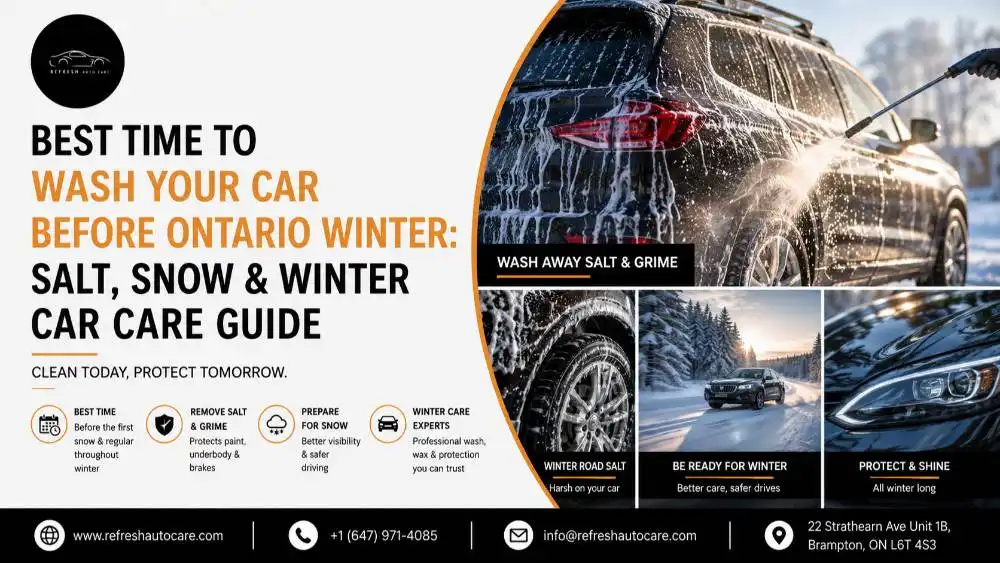
Best Time to Wash Your Car Before Ontario Winter: Salt, Snow & Winter Car Care Guide
13-Aug-2026
For most Brampton and Southern Ontario drivers, late October through early November is a practical time for a thorough pre-winter car wash and protection service. However, there is no official province-wide "last wash" date. The best timing depends on temperatures, weather forecasts and when winter road treatment begins in your area.
Before significant salt, brine and slush exposure, clean the exterior, wheel wells and underbody, remove bonded contaminants when needed, and apply suitable paint protection. During winter, wash based on actual salt and slush buildup rather than following a fixed calendar.
Why Trust This Guide?
| Trust Signal | Details |
|---|---|
| Updated for 2026 | Latest winter car care practices and data |
| Industry Data | Government of Canada road salt statistics |
| Local Expertise | Brampton and GTA winter driving conditions |
| Real-World Experience | Since 2014 serving Brampton-area vehicle owners |
| Actionable Insights | Checklists, decision rules, and practical guidance |
This guide is based on real-world experience, industry data, and practical expertise in vehicle care and protection for Ontario winters.
Last Reviewed: July 2026
Best Time to Wash Your Car Before Ontario Winter: Quick Guide
| Question | Short Answer |
|---|---|
| Best time for a pre-winter detail | Late October to early November is a practical window |
| Should I wash before the first snow? | Yes, especially before significant salt exposure |
| How often should I wash in winter? | Based on salt/slush buildup and driving conditions |
| Should I clean the underbody? | Yes, particularly during active salt season |
| Is ceramic coating good for winter? | It can make maintenance easier and add surface protection |
| Does ceramic coating stop rock chips? | No — it provides surface protection, not physical impact protection |
| Does PPF protect against rock chips? | Yes, it is designed for physical impact protection |
| Should I wash after a thaw? | Often yes if salt/slush has accumulated |
| Should I dry the car after washing? | Yes, especially around seals and other areas where water can freeze |
When Should You Wash Your Car During Ontario Winter?
| Situation | What to Do |
|---|---|
| Before winter road treatment | Complete a thorough wash and protection service |
| Significant salt/brine buildup | Wash when conditions allow |
| After prolonged slushy driving | Inspect and wash if heavily contaminated |
| After a thaw | Check for salty moisture and wash if buildup is significant |
| Vehicle has ceramic coating | Follow coating-specific maintenance instructions |
| Vehicle has PPF | Wash normally using film-safe products |
| Very cold weather | Prioritize safe washing and thorough drying |
| No significant salt/slush buildup | No need to wash solely because a certain number of days have passed |
Who This Ontario Winter Car-Wash Guide Is For
This guide is useful if you:
- Drive regularly in Brampton or the GTA during winter
- Commute on salted roads and highways
- Own a daily driver, SUV, truck or luxury vehicle
- Have ceramic coating or PPF
- Want to prepare your vehicle before winter
- Are comparing a regular car wash with professional detailing
- Want to reduce winter salt buildup on paint, wheels and underbody
Why Winter Washing Matters in Ontario
Ontario winter driving can expose vehicles to road salt, brine, slush and repeated freeze-thaw conditions. Regular washing helps remove accumulated winter contaminants before they remain on exterior and underbody surfaces for extended periods.
Canada uses approximately 5 million tonnes of road salt annually for winter road maintenance. Road salt and brine can remain on vehicles during winter driving, particularly around lower-body and underbody areas, which is why removing accumulated salt is an important part of winter vehicle maintenance. The Government of Canada reports this figure as part of its road salt management information.
Ontario's repeated freeze-thaw conditions can increase exposure to moisture, slush and road salt during winter driving. Temperatures swing above and below freezing, melting snow into salty liquid that seeps into seams, joints, and chip marks. These materials can collect around wheel wells, seams, suspension components and other hard-to-reach areas, making regular cleaning particularly important during winter.
Road salt and salty moisture can increase corrosion risk when they remain on exposed metal surfaces. Leaving salt and salty moisture on the vehicle for extended periods increases the opportunity for corrosion, which is why regular winter washing and undercarriage cleaning matter.
When Is the Best Time to Wash Your Car Before Winter?
For many Brampton and Southern Ontario drivers, late October through early November is a practical window for pre-winter vehicle preparation. Here is why timing matters:
1. Winter road treatment may not have begun yet
Ideally, complete your pre-winter wash and paint preparation before significant salt, brine or slush exposure begins. However, road treatment can start before major snowfall, so use local weather and road conditions rather than a fixed date as your trigger.
2. Temperatures are still workable
Washing and drying your car in October or early November is much more pleasant than doing it in January. You can actually get the car properly dry, which is essential for preventing water spots and ensuring your wax or sealant bonds correctly.
3. You can apply proper protection
A pre-winter detail allows you to apply a protective layer — whether it is a high-quality wax, a synthetic sealant, or a ceramic coating — that will shield your paint through the worst of the winter.
4. You can address existing damage
Before winter hits, inspect exposed paint chips and consider appropriate repair where needed, along with undercarriage cleaning and paint protection.
Should You Wash Your Car Before the First Snow?
Yes. Before the first significant snowfall, wash the vehicle thoroughly, clean the wheel wells and underbody, remove bonded contaminants from the paint if necessary, inspect paint chips and apply an appropriate protection product. If the vehicle already has ceramic coating or PPF, follow the manufacturer's maintenance instructions rather than applying incompatible products.
What to do before the first snow:
- Wash the exterior thoroughly
- Clean wheel wells
- Rinse the underbody
- Remove bonded paint contamination if necessary
- Inspect paint chips and existing damage
- Apply suitable paint protection
- Clean and protect interior surfaces
- Check door and trunk seals
- Dry the vehicle thoroughly
How Often Should You Wash Your Car in an Ontario Winter?
There is no single ideal interval for every vehicle. During active salt season, inspect your vehicle regularly and wash it whenever substantial salt or slush has accumulated. Daily commuters who regularly drive salted highways may need more frequent washing than occasional drivers. After heavy storms, prolonged slushy driving or a thaw that leaves roads wet and salty, consider washing sooner.
As a practical starting point, a weekly visual inspection can help you identify significant salt and slush buildup; actual washing frequency should depend on driving and road conditions. After heavy salt exposure or a thaw, washing sooner can be beneficial.
Seasonal Guidelines
| Period | Recommended Approach | Main Focus |
|---|---|---|
| Late Fall | One thorough pre-winter detail | Full exterior wash, paint decontamination, wax/sealant/ceramic coating, undercarriage clean |
| Early Winter | Based on salt/slush buildup | Remove salt accumulation, focus on undercarriage and wheel wells |
| Mid-Winter | Based on driving and weather conditions | Wash after major storms and warm spells |
| Late Winter / Early Spring | Based on conditions, then a post-winter detail | Remove accumulated salt, prepare for spring |
A Simple Winter Wash Decision Rule
Use road conditions—not the calendar alone—to decide when to wash.
- Low salt exposure: Follow your normal maintenance routine.
- Visible salt/brine buildup: Wash when temperatures and facility conditions allow.
- After prolonged slushy driving: Inspect the lower body, wheel wells and underbody and wash if heavily contaminated.
- After a thaw: Check for accumulated salty moisture and wash if necessary.
- Before a major freeze: If you wash, allow sufficient drying around seals, handles and other water-trapping areas.
When Should You Wash After a Snowstorm or Thaw?
When temperatures rise above freezing, accumulated snow, ice and salty residue can melt into liquid brine, increasing moisture exposure around lower-body and underbody areas. After a thaw, consider washing sooner if your vehicle has accumulated salty water, brine or slush.
Wash triggers to watch for:
1. A warm spell after deep cold
When temperatures climb above freezing after a period of extreme cold, accumulated snow, ice and salty residue can melt into liquid brine. A thaw can be a useful trigger to inspect the vehicle and wash if significant salt and salty moisture have accumulated.
2. A major storm treatment
After a major snowfall, treated roads can increase your vehicle's exposure to salt, brine and slush, particularly during highway and arterial-road driving.
3. A long slushy highway run
Regular highway driving on routes such as the 401, 410 and QEW can increase exposure to road spray, brine and winter contaminants.
4. Roads that look white
That chalky surface is a giant hint that your car is collecting more than dirt.
5. Visible salt buildup around wheel wells
If you can see white salt residue collecting around wheel arches, rocker panels or lower doors, it is a good indication that the vehicle needs cleaning.
Practical rule: If the weather or road conditions changed sharply, your wash timing probably changed too. Wash after the events that load your car with salt, and pay particular attention to the underside whenever significant salt or slush has accumulated.
Why Undercarriage and Wheel-Well Cleaning Matter
Most drivers focus on the visible paint. The hood, the roof, the doors — that is what looks filthy first. But the underbody, wheel wells and other exposed lower components can receive substantial salt, brine and slush exposure during winter driving.
Subframes, suspension components, mounting points, seams and other lower-body areas can collect winter contamination that is difficult to see during a routine exterior wash.
During salt season, underbody and wheel-well cleaning deserves particular attention because these areas can collect road salt, brine and slush that are easy to overlook. The CAA recommends paying close attention to the undercarriage and wheel wells because those areas are vulnerable to rust and corrosion from road salt.
If washing at home, ensure you clean the underbody and wheel wells thoroughly. If using a pressure washer, follow the equipment and vehicle manufacturer's recommendations and avoid directing excessive pressure at damaged seals, sensors, electrical components or other sensitive areas. If using a wash bay or drive-through, pick one with underbody spray, not just soap and spinning cloth.
Ontario Winter Car Wash Checklist
Before winter:
- Wash the exterior thoroughly
- Clean wheel wells
- Rinse the underbody
- Remove bonded paint contamination if necessary
- Inspect paint chips and existing damage
- Apply suitable paint protection
- Clean and protect interior surfaces
- Check door and trunk seals
- Dry the vehicle thoroughly
During winter:
- Remove road salt regularly
- Pay attention to the underbody and wheel wells
- Wash after significant salt exposure
- Avoid letting salty slush remain on the vehicle for extended periods
- Dry door seals and other areas where water can freeze
- Follow the care instructions for ceramic coatings or PPF
How to Protect Your Car From Road Salt
The best way to reduce winter salt exposure is to combine regular washing with appropriate paint and corrosion protection. Focus on the areas where salt and slush accumulate most heavily, including the wheel wells and underbody. Keep the exterior clean, remove salt buildup rather than allowing it to remain for long periods, and follow the manufacturer's maintenance instructions for any ceramic coating or PPF.
Protection tips:
- Wash regularly during salt season
- Clean wheel wells
- Rinse the underbody
- Dry door seals and other water-trapping areas
- Repair exposed paint damage when appropriate
- Use suitable paint protection
- Follow coating/PPF care instructions
Professional Pre-Winter Car Detailing: What Should It Include?
A professional pre-winter detail can be useful when the vehicle needs more than routine washing, particularly if it has bonded contamination, paint defects or requires new paint protection. A professional car detailing service in Brampton can combine exterior cleaning, paint decontamination, correction and protection based on your vehicle's condition.
Here is what a good pre-winter detail should include:
1. Thorough Exterior Wash and Decontamination
This goes beyond a basic wash. It includes a hand wash, clay bar treatment to remove bonded contaminants, and paint decontamination to remove iron particles and industrial fallout that regular washing cannot touch.
2. Paint Correction (If Needed)
If your paint has swirl marks, oxidation or suitable light defects, addressing them before winter can improve the finish and give you a cleaner surface for subsequent protection.
3. Paint Protection
Paint protection can be an important part of pre-winter preparation, depending on the vehicle's condition and the type of protection selected. Options include:
- Wax — Provides short-term protection and a glossy finish.
- Sealant — Synthetic protection that lasts several months.
- Ceramic Coating — A liquid polymer that bonds to the paint, creating a hydrophobic layer that repels water and contaminants.
4. Undercarriage Cleaning and Protection
An undercarriage wash removes accumulated winter contamination. Where appropriate, a separate corrosion-protection or rustproofing treatment may provide additional protection; suitability depends on the vehicle and the product used.
5. Interior Protection
Winter means wet boots, slush, and salt on your carpets and upholstery. A good interior detail with fabric protection can help prevent stains and salt damage.
Ceramic Coating vs Wax vs Sealant for Winter
| Protection | Main Purpose | Winter Relevance |
|---|---|---|
| Wax | Short-term surface protection | Helps with routine maintenance |
| Sealant | Longer-lasting surface protection | Helps keep contaminants easier to remove |
| Ceramic Coating | Surface/hydrophobic protection | Helps water and contaminants release more easily and simplifies maintenance |
Ceramic coating creates a hydrophobic protective layer that can make the painted surface easier to clean and help reduce the adhesion of water and environmental contaminants. It does not make the paint immune to road salt, scratches, stone chips or other winter damage, so regular washing remains important. Care requirements vary by coating. Ceramic coating maintenance also depends on the specific product. Always follow the maintenance instructions supplied for your specific coating.
Ceramic Coating vs PPF: What's Better for Winter?
| Protection | Main Purpose | Winter Relevance |
|---|---|---|
| Ceramic Coating | Hydrophobic surface protection | Easier maintenance and contaminant resistance |
| PPF | Physical paint protection | Better suited to rock chips and impact-prone areas |
Ceramic coating and PPF solve different problems. Ceramic coating primarily adds surface protection and hydrophobic properties, while PPF in Brampton is designed to physically protect painted areas from impacts such as road debris and stone chips.
Short answer: Ceramic coating is primarily for surface protection and easier maintenance; PPF is primarily for physical protection against road debris and stone impacts. PPF protects only the areas where the film is installed.
PPF can protect high-impact painted areas such as bumpers, hoods, fenders and mirrors from certain forms of physical road-debris damage. It does not replace underbody cleaning or corrosion protection.
How a Professional Detailer Approaches Pre-Winter Preparation
A proper pre-winter service should begin with vehicle inspection rather than automatically applying every available treatment. The technician should assess paint condition, bonded contamination, existing protection, wheel and wheel-well buildup, and the vehicle's intended winter use. The appropriate wash, decontamination and protection process can then be selected based on those conditions.
Refresh Auto Care has been serving Brampton-area vehicle owners since 2014, with services covering routine washing, detailing, paint decontamination, ceramic coating and paint protection film. Pre-winter recommendations should be based on the vehicle's paint condition, existing protection and expected winter use rather than automatically applying the same service to every vehicle.
Winter Car Wash Near You in Brampton: What to Look For
If you are searching for a car wash near you in Brampton, here is what you should look for in a professional provider:
1. Undercarriage Cleaning
Does the service include undercarriage cleaning? It is an important feature to look for during Ontario's salt season, particularly if you regularly drive on treated roads.
2. Hand Wash or Touchless
A properly performed hand wash can give the technician greater control over wash media and contact with the paint. Touchless systems can also reduce direct contact. The quality of the equipment, chemicals, technique and drying process matters more than the label alone.
3. Drying Method
Proper drying prevents water spots and ice formation. Look for services that use clean microfiber towels or forced air drying.
4. Detailing Services
Does the provider offer paint decontamination, paint correction and paint protection? These services can be useful when the vehicle's condition and protection needs justify them.
5. Convenience
Is pickup and delivery available? Can you book online? Is the location convenient for your commute?
Why Choose Refresh Auto Care in Brampton?
Established in 2014, Refresh Auto Care is a Brampton-based automotive detailing and protection studio offering car washing, detailing, paint decontamination, ceramic coating, PPF and related services. Located at 22 Strathearn Ave Unit 11B, Brampton, ON L6T 4S9, we serve customers across Brampton, Mississauga, Etobicoke, and the GTA.
Brampton drivers can see substantial winter road-treatment exposure on major commuter routes and arterial roads, so highway commuters may accumulate salt and brine faster than vehicles that are driven less frequently.
Our winter preparation services include:
- Car Wash Brampton — Professional hand washing for routine maintenance.
- Car Detailing Brampton — Comprehensive interior and exterior detailing services.
- Paint Decontamination Brampton — Removal of bonded contaminants before winter.
- Ceramic Coating Brampton — Hydrophobic protection that repels water and contaminants.
- Paint Protection Film Brampton — A physical protective film designed to reduce damage from road debris, stone impacts and certain surface abrasion.
- Pickup and Delivery Service Brampton — Available in Brampton, Mississauga, Etobicoke and selected Toronto areas, subject to service-area availability.
Detailing and Paint-Care Services for Winter
| Service | What It Involves | Winter Benefit |
|---|---|---|
| Routine Car Wash | Hand wash, exterior cleaning | Removes surface salt and slush |
| Undercarriage Wash | Pressure wash underbody and wheel wells | Removes salt from vulnerable areas |
| Paint Decontamination | Chemical/mechanical removal of bonded contaminants | Prepares paint for protection |
| Paint Correction | Machine polishing to reduce suitable defects | Removes swirl marks before winter |
| Ceramic Coating | Hydrophobic surface protection | Easier maintenance and contaminant resistance |
| PPF | Physical paint protection | Protects against rock chips and impacts |
Winter Car-Washing Mistakes to Avoid
- Waiting until spring to remove road salt. Road salt and salty moisture can increase corrosion risk when they remain on exposed metal surfaces. Waiting until spring turns a manageable cleanup into a bigger restoration job.
- Ignoring the underbody. The undercarriage and lower-body areas can receive substantial exposure to salt, brine and slush during winter driving, making them important areas to clean.
- Using contaminated brushes or wash media. Shared brushes can carry dirt and abrasive particles from previous vehicles, increasing the risk of wash-induced marring.
- Washing without considering drying conditions. Water left to freeze in seals, locks, and other areas can cause damage.
- Using very hot water on frozen glass or other cold surfaces. A sudden temperature change can create thermal stress and potentially damage glass.
- Applying incompatible chemicals to ceramic coatings or PPF. Follow the manufacturer's maintenance instructions for coated or filmed vehicles.
- Assuming ceramic coating means the car no longer needs washing. Ceramic coating helps protect and makes cleaning easier, but it does not eliminate the need for regular washing, especially in winter salt conditions.
Ontario Winter Car Wash FAQs
1. When is the best time to wash my car before Ontario winter?
For most Brampton and Southern Ontario drivers, late October through early November is a practical time for a thorough pre-winter wash and protection service, but the exact timing depends on weather, road conditions and when winter maintenance begins in your area.
2. How often should I wash my car during winter in Ontario?
There is no single ideal interval for every vehicle. During active salt season, inspect your vehicle regularly and wash it whenever substantial salt or slush has accumulated. Daily commuters who regularly drive salted highways may need more frequent washing than occasional drivers.
3. Should I wash my car after a snowstorm?
If the storm leaves significant salt, brine or slush on the vehicle, washing afterward can help remove the buildup. Focus especially on the wheel wells and underbody.
4. Should I wash my car after a thaw?
Often yes. When temperatures rise above freezing, accumulated snow, ice and salty residue can melt into liquid brine. A thaw can be a useful trigger to inspect the vehicle and wash if significant salt and salty moisture have accumulated.
5. Can road salt damage car paint?
Yes. Road salt and salty moisture can increase corrosion risk when they remain on exposed metal surfaces. Regular washing helps remove accumulated salt and winter grime.
6. Why is undercarriage washing so important?
Salt and salty slush can accumulate around underbody components, suspension areas, mounting points, seams and other hard-to-reach surfaces. An underbody wash helps remove accumulated salt, brine and winter grime from exposed lower components, reducing the amount of corrosive contamination left on those surfaces.
7. Is hand washing or touchless washing better for winter?
Both can be appropriate depending on the equipment and technique. A properly performed hand wash can provide more control over wash media, while a touchless system can reduce direct contact with the paint. The quality of the process, chemicals, pressure, drying and underbody cleaning all matter.
8. Is ceramic coating good for winter?
Ceramic coating can make maintenance easier and add surface protection, but it does not make the paint immune to road salt, scratches, stone chips or other winter damage. Regular washing remains important. Always follow the specific maintenance instructions provided for your coating.
9. Does PPF protect against winter damage?
PPF provides physical protection against rock chips, road debris and certain forms of impact. It protects only the areas where the film is installed. It does not replace underbody cleaning or corrosion protection.
10. What is the difference between car washing and detailing?
A car wash primarily focuses on removing surface dirt and road contamination. Detailing is a broader category of vehicle-care services that can include deeper interior cleaning, paint decontamination, polishing or paint correction, and protective products depending on the package and vehicle condition.
11. What should I look for in a winter car wash?
Look for a wash that includes undercarriage cleaning, uses appropriate wash chemicals and equipment (whether the process is hand washing or touchless), and offers proper drying. For pre-winter preparation, consider a full detail with paint decontamination and protection when your vehicle's condition warrants it.
12. Can I wash my car after driving on salted roads?
Yes. If your vehicle has accumulated road salt, brine or slush, washing can help remove those contaminants from the paint, wheel wells and underbody. Choose a wash method that is appropriate for the weather conditions and allow sufficient drying around door seals and other areas where water can freeze.
13. Where can I get a winter car wash in Brampton?
Brampton drivers can choose between self-service, touchless and professional hand-wash options depending on their vehicle's condition and winter-care needs. For a more comprehensive pre-winter service, a professional detailing provider can combine exterior washing, paint decontamination, undercarriage cleaning and paint protection.
14. Does Refresh Auto Care offer pickup and delivery?
Yes. Pickup and delivery are available in Brampton, Mississauga, Etobicoke and selected Toronto areas, subject to service-area availability.
15. How long before winter should I wash my car?
For Brampton drivers, scheduling a thorough pre-winter wash and protection service in late October or early November is a practical approach. If winter road treatment begins earlier because of weather conditions, move the service earlier rather than waiting for a fixed calendar date.
16. Can I wash my car when temperatures are below freezing?
Yes, but washing below freezing requires extra care. Water can freeze around door seals, handles, locks and other exposed areas. If you wash during freezing conditions, choose a facility equipped for winter washing, ensure the vehicle is thoroughly dried, and follow the vehicle manufacturer's recommendations.
Get Your Vehicle Ready for Ontario Winter
Don't wait until heavy salt and slush have accumulated. Schedule your pre-winter wash and protection service before winter road treatment becomes routine.
Contact Refresh Auto Care to discuss your winter car-care service.